Human Supply earns a commission when you buy through our links. We only feature products that pass our standard — the pick comes first, the link second.
Indoor air is often dirtier than the air outside, and the purifier market knows it — which is why it’s crowded with machines that look the part and filter very little. We screened for verified filtration: True HEPA at minimum, the actual capture spec, and the coverage to match the room. Five earned a place, from the medical-grade flagship to the bedroom pick.
The quick list
| Purifier | Filtration | Best for |
|---|---|---|
| IQAir HealthPro Plus | HyperHEPA to 0.003 microns | The no-compromise pick |
| AirDoctor 3500 | UltraHEPA to 0.003 microns | IQAir specs, lower price |
| Coway Airmega 400S | True HEPA | Large open-plan rooms |
| Levoit Core 400S | True HEPA | Bedrooms & offices |
| Blueair 211+ | HEPASilent | Quiet operation |
IQAir HealthPro Plus — the benchmark
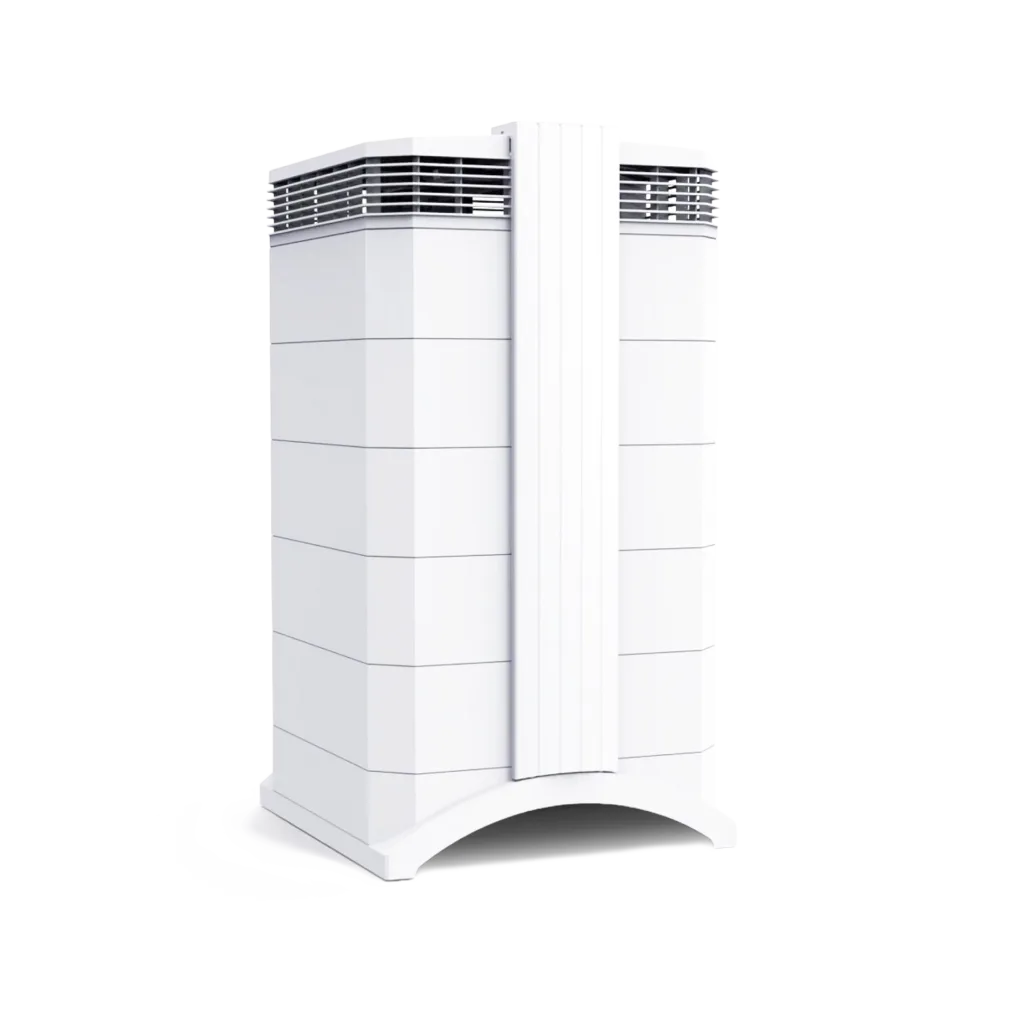
IQAir HealthPro Plus Air Purifier
- HyperHEPA filtration to 0.003 microns
- Gas-phase filtration for VOCs
- Hospital-grade, residential scale
If air quality is non-negotiable, this is the one. IQAir’s HyperHEPA filtration captures particles down to 0.003 microns — a hundred times smaller than the 0.3-micron standard HEPA threshold — and adds gas-phase filtration for VOCs. It’s hospital-grade technology in a residential machine, priced accordingly.
Who it’s for: anyone who wants the most thorough residential filtration made, full stop.
AirDoctor 3500 — flagship specs, friendlier price
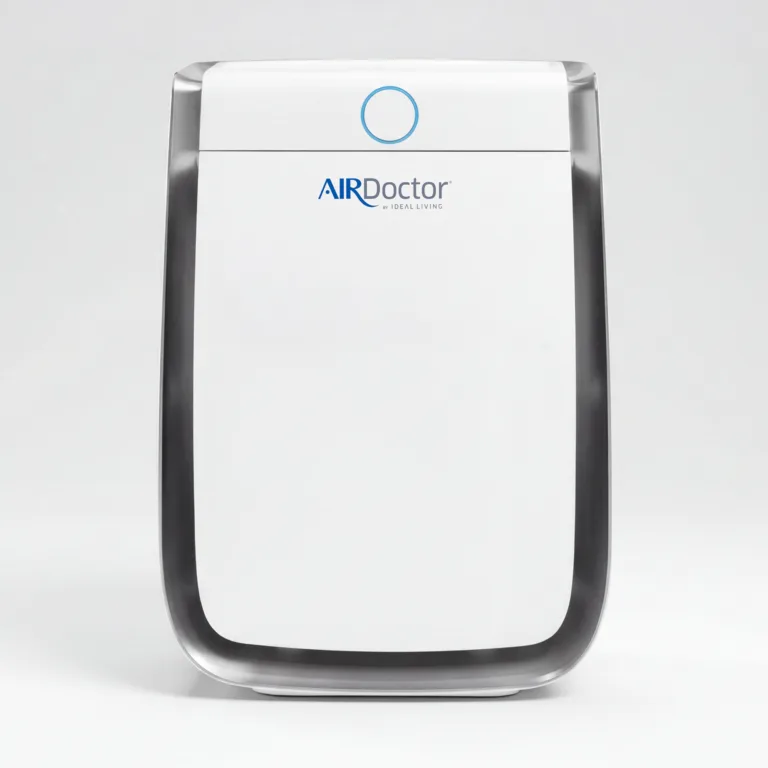
AirDoctor Air Purifier 3500
- UltraHEPA to 0.003 microns
- Carbon filter for VOCs
- Auto mode with air-quality sensor
AirDoctor’s UltraHEPA filter claims the same 0.003-micron capture spec as IQAir at a meaningfully lower price, with a dual carbon filter for VOCs and an auto mode driven by an onboard air-quality sensor. It’s the value pick for people who want top-shelf numbers without the top-shelf cost.
Who it’s for: the spec-chaser on a budget.
Coway Airmega 400S — for large open-plan rooms
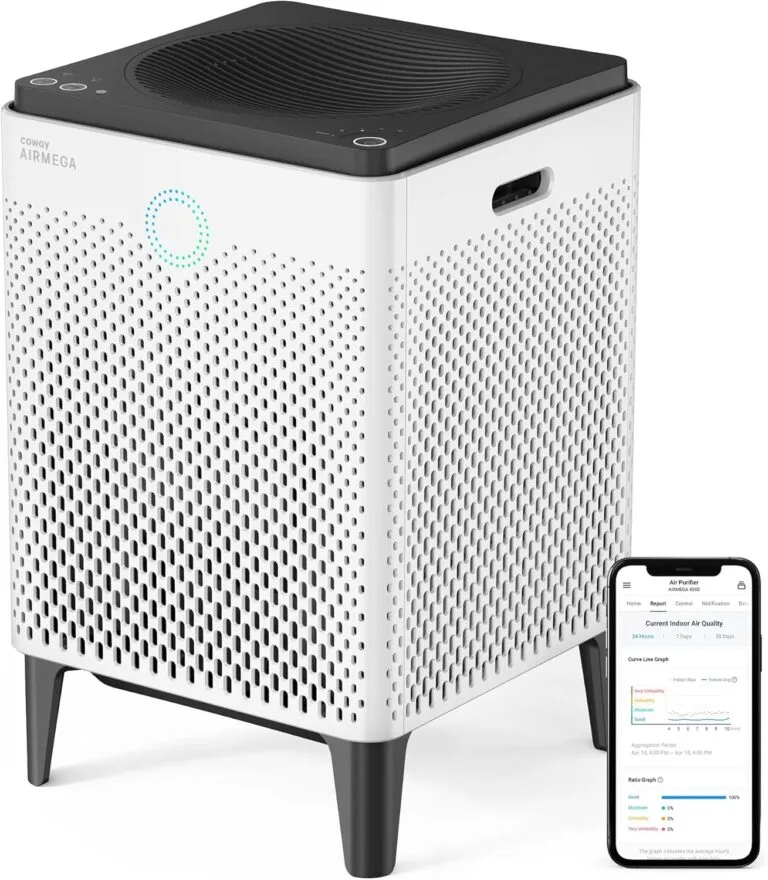
Coway Airmega 400S Smart Air Purifier
- True HEPA — captures particles to 0.3 microns
- Covers up to 1,560 sq ft
- Activated carbon for odors & VOCs
True HEPA filtration, activated carbon for odors, and the coverage to clear up to 1,560 square feet at two air changes an hour — the Coway is the one for big, open living spaces where smaller units can’t keep up. Smart-mode auto operation and app control round it out.
Who it’s for: large living rooms and open-plan homes.
Levoit Core 400S — the bedroom & office pick
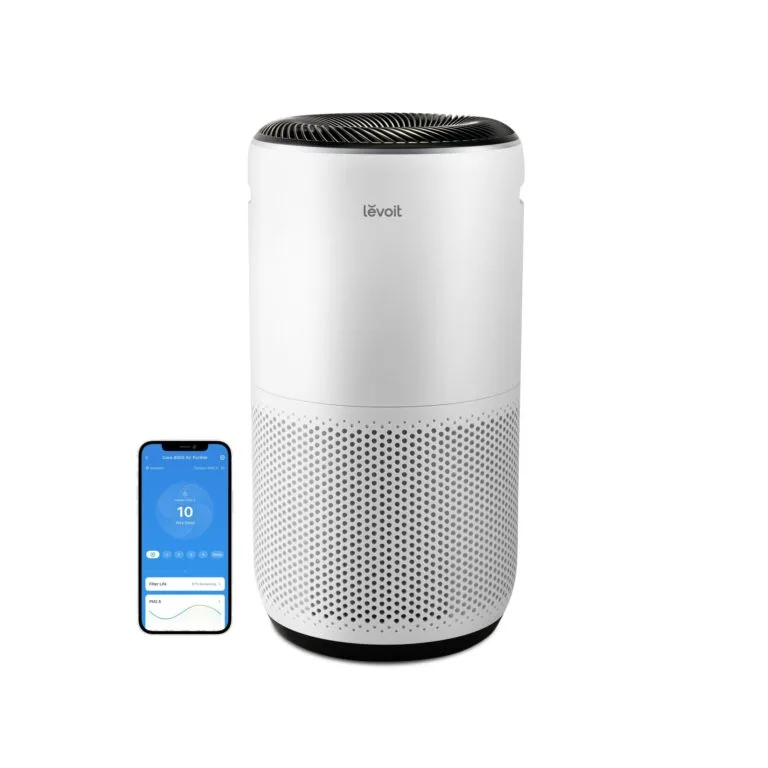
Levoit Core 400S Smart True HEPA Air Purifier
- True HEPA certified
- Covers up to 403 sq ft
- Auto mode with air-quality sensor
Not every room needs a tower. The Core 400S delivers True HEPA filtration sized for a master bedroom, office, or nursery (up to about 400 square feet), with an air-quality sensor and quiet auto mode. It’s the sensible mid-market choice for a single room.
Who it’s for: a bedroom, office, or nursery on a normal budget.
Blueair 211+ — quiet by design
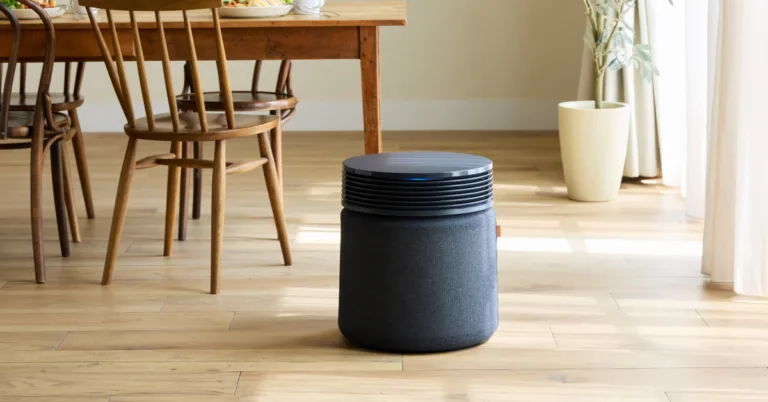
Blueair 211+ Air Purifier
- HEPASilent — HEPA-level at lower noise
- Quiet enough for bedrooms
- Swedish-engineered filtration
Blueair’s HEPASilent technology pairs an electrostatic charge with mechanical filtration to hit HEPA-equivalent performance at lower fan speeds — which means it’s quiet. For a bedroom where fan noise is the dealbreaker, that’s the whole point.
Who it’s for: light sleepers and noise-sensitive rooms.
What we screened for
Air purifiers are easy to fake because you can’t see what they’re doing. Two things separate the real from the decorative:
- Verified True HEPA (or better). The filter must actually be certified True HEPA — capturing 99.97% of particles at 0.3 microns — not “HEPA-type” or “HEPA-like,” which mean nothing.
- Coverage that matches the room. A capable filter in an undersized machine can’t clear a large space. We match each pick to a realistic room size, measured in air changes per hour.
Skip ozone-generating “ionizers” sold as purifiers — they can create the very pollutant you’re trying to remove.
Frequently asked questions
What’s the difference between True HEPA and “HEPA-type”?
True HEPA is a defined standard — 99.97% capture at 0.3 microns. “HEPA-type,” “HEPA-like,” and “HEPA-style” are marketing terms with no guaranteed performance. Always look for certified True HEPA.
Do I need a purifier with a carbon filter?
If you want to address odors, smoke, or VOCs (off-gassing, cooking, paint), yes — a HEPA filter handles particles but not gases. Every pick here that targets VOCs pairs HEPA with activated carbon.
How big a purifier do I need?
Match the unit’s rated coverage to your room and aim for at least two air changes per hour. A bedroom needs far less than an open-plan living room — an oversized unit just runs quieter at low speed.