Human Supply earns a commission when you buy through our links. We only feature products that pass our standard — the pick comes first, the link second.
Le Creuset and Staub make the two best enameled cast-iron Dutch ovens money can buy, and both clear our standard for the same reason: enameled cast iron has no synthetic nonstick coating to wear off, won’t react with acidic food, and lasts for generations. So which one? Here’s the honest breakdown — they’re closer than the internet makes them sound.
The short answer
You can’t go wrong. Both are made in France from enameled cast iron with no coating, both will outlive you, and both cost about the same. Choose Le Creuset for a lighter-feeling pot, a smooth light-colored interior that’s easy to monitor browning in, and the widest color range. Choose Staub for a matte-black interior that hides stains, a self-basting lid, and a slightly more heat-retentive build.
Le Creuset
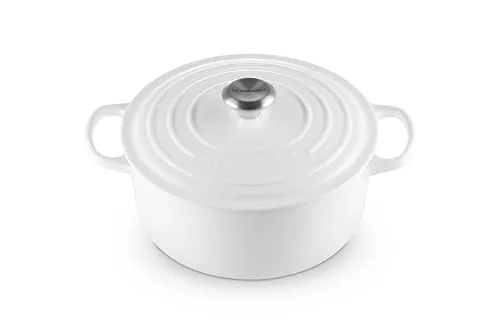
Le Creuset Signature Enameled Cast Iron Dutch Oven, 5.5 qt
- Enameled cast iron — no nonstick
- Handles acidic braises
- Made in France, lifetime build
Le Creuset’s interior is a sand-colored enamel, which makes it easy to see fond developing and judge how dark a sear is getting. The pots run a touch lighter for their size, the lined-up colors are iconic, and the brand’s reputation for lasting generations is earned. The light interior does show staining over time — cosmetic, not functional.
Staub
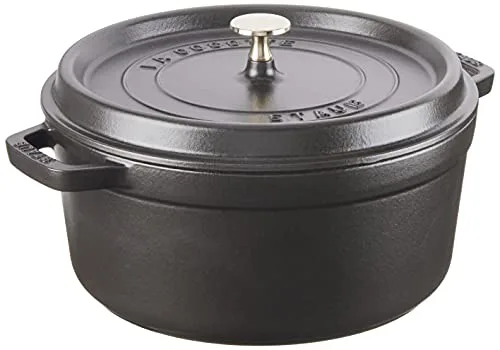
Staub Enameled Cast Iron Dutch Oven, 5.5 qt
- Enameled cast iron
- No nonstick coating
- Handles acidic dishes
Staub goes the other way: a matte-black enamel interior that hides stains and, many cooks feel, develops a better sear surface over time. The lid has small spikes (or a textured underside) designed to drip condensation back onto the food as it cooks — the “self-basting” feature — which braisers love. It tends to feel a hair heavier and more heat-retentive.
Head to head
| Le Creuset | Staub | |
|---|---|---|
| Material | Enameled cast iron | Enameled cast iron |
| Coating | None (glass enamel) | None (glass enamel) |
| Interior | Light, easy to monitor | Matte black, hides stains |
| Lid | Standard | Self-basting |
| Made in | France | France |
| Feel | Slightly lighter | Slightly heavier / more heat retention |
Which passes “cleaner”?
On the metric that matters to us — materials — it’s a tie. Neither uses a synthetic nonstick coating; both are inert glass enamel over iron, safe for acidic tomato and wine braises, with nothing to flake into your food. This is the whole point of enameled cast iron, and why both sit comfortably on our PFAS-free cookware list. The decision is feel and preference, not safety.
The bottom line
If you want the lighter pot and the easy-to-read interior, go Le Creuset. If you want the stain-hiding black interior and the self-basting lid, go Staub. Either way you’re buying a pot you’ll hand down. Browse both, plus the rest of the cookware, on the Kitchen shelf.
Frequently asked questions
Is Le Creuset or Staub better for braising?
Both excel; Staub’s self-basting lid and heavier build give it a slight edge for long braises, while Le Creuset’s lighter weight and visible interior make it a touch easier to handle and monitor.
Do enameled cast-iron Dutch ovens have any coating to worry about?
No. The interior is glass enamel fused to cast iron — not a synthetic nonstick coating — so there’s nothing to scratch off or leach, and they’re safe for acidic foods.
Are they worth the price?
For a pot that lasts decades with no coating to replace, yes. Spread across a lifetime of use, both are among the better cost-per-use buys in the kitchen.